Dot tech may mean dot implosion or dot stack. There are a lot of terms used that are made up. It could also mean honeycomb, but probably not.
See the blog of terms
Dot stack

Implosion

Dot tech may mean dot implosion or dot stack. There are a lot of terms used that are made up. It could also mean honeycomb, but probably not.
See the blog of terms
Dot stack
Implosion
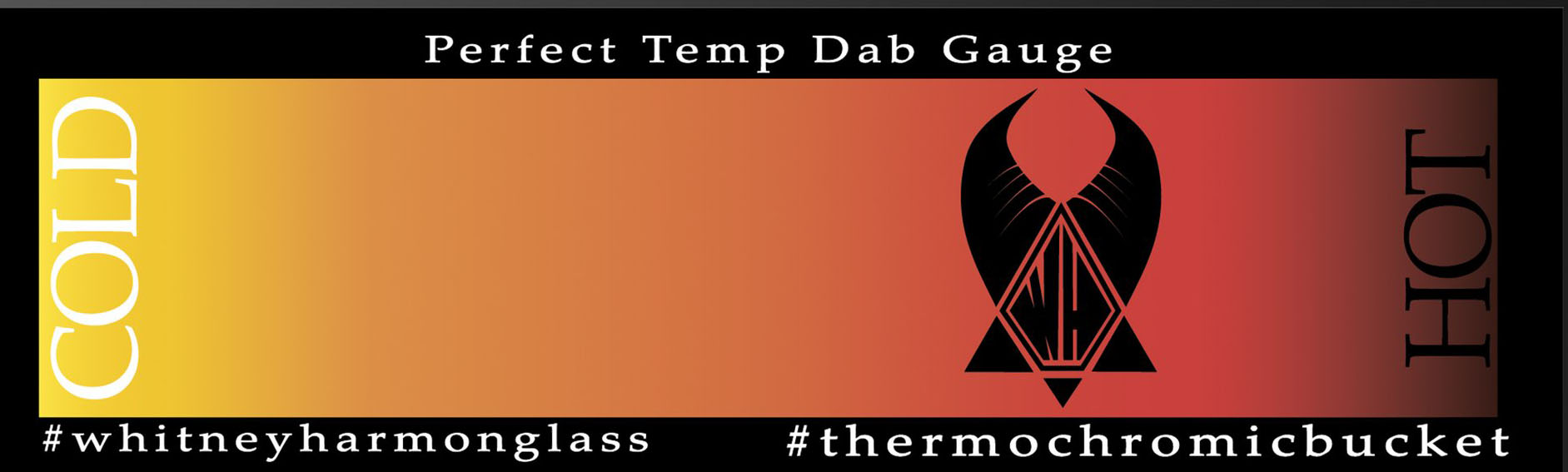
The best way is to see our blog on this. Red is hot, orange is good and yellow is cold.
A glassblower will sleeve a pipe or sleeve glass when they want more clear on the outside. Many times this is done for glass-like cadmium glass that will boil when placed in the flame. Most all linework glass is sleeved. Most all dicrho glass is sleeved.
Many time this is also done to stretch the color and give the glass more weight
A blowout is not a sleeve, but is kinda the same
We have heard this for the last 20 years and a double blown is stronger.
What does this mean and is it real?
In a since all almost pipes are double, triple or maybe even 20 times blown. This is how many times a pipe is shrunk and re blown out so the color on the inside gets melted in. This can usually be done in 2-3 times. But it can also be done by a good blower that allowed the glass to get hot enough to be done in 1 blow.
What makes a good inside out spoon is that the inside is smooth like the outside. Whatever it takes to make this happen is what it takes and means nothing other than if it is smooth inside the pipe has been worked properly.
This is because of the minerals in the color. The thinner the minerals get in the glass the thinner the minerals get thus making the color look see-through or transparent.
At a molecular level, we are all see-through.
Lined tubing is made from rods of color stacked in a tube. The air is removed and you are left with colored tubing.
This colored tubing is used to wig wag the glass. The the blower can switch the access to make a switch ball.
Wig wags can be made a few ways. A neat way to get the wig and wags tight is called the bender back technique.
We do not know this as it is a felony to extract this way in Colorado. Any tubes we sell in the store are for botanical flowers like lavender.
Yes and no
It is ok to use it as long as you do not inhale the alcohol vapor. The best bet is to clean the banger after it has cooled to avoid any of the alcohol from evaporating and you inhaling it.
The alcohol will not crack a quartz banger that is hot, just avoid breathing in any of the alcohol vapors if you use it this way.
We do recommend using a tidy tip after you are finished using your banger or enail. This keeps it clean and you can avoid using alcohol when the banger is hot when you maintain the banger with tidy tip.
As the legal use of marijuana and other cannabis products grows, consumers are becoming more curious about their options. This includes cannabidiol (CBD) and tetrahydrocannabinol (THC), two natural compounds found in plants of the Cannabis genus.
CBD can be extracted from hemp or from marijuana. Hemp plants are cannabis plants that contain less than 0.3 percent THC, while marijuana plants are cannabis plants that contain higher concentrations of THC. CBD is sold in the form of gels, gummies, oils, supplements, extracts, and more.
THC is the main psychoactive compound in marijuana that gives the high sensation. It can be consumed by smoking marijuana. It’s also available in oils, edibles, tinctures, capsules, and more.
Both compounds interact with your body’s endocannabinoid system, but they have very different effects.
Read on to learn more about these compounds. While they may have a lot in common, they have some key differences that determine how they’re used.
Both CBD and THC have the exact same molecular structure: 21 carbon atoms, 30 hydrogen atoms, and 2 oxygen atoms. A slight difference in how the atoms are arranged accounts for the differing effects on your body.
Both CBD and THC are chemically similar to your body’s own endocannabinoids. This allows them to interact with your cannabinoid receptors.
The interaction affects the release of neurotransmitters in your brain. Neurotransmitters are chemicals responsible for relaying messages between cells and have roles in pain, immune function, stress, sleep, to name a few.
Despite their similar chemical structures, CBD and THC don’t have the same psychoactive effects. In fact, CBD is a nonpsychoactive compound. That means it doesn’t produce the “high” associated with THC.
THC binds with the cannabinoid 1 (CB1) receptors in the brain. It produces a high or sense of euphoria.
CBD binds very weakly, if at all, to CB1 receptors. In fact, it can interfere with the binding of THC and dampen the psychoactive effects.
In the United States, cannabis-related laws are evolving regularly. Marijuana and THC are on the list of controlled substances, so they’re prohibited under federal law.
However, many states and Washington, D.C. have passed cannabis-related laws making medical marijuana with high levels of THC legal. The marijuana may need to be prescribed by a licensed physician.
In addition, several states have made recreational use of marijuana and THC legal.
In states where marijuana is legal for recreational or medical purposes, you should be able to buy CBD.
Before you try to buy products with CBD or THC, get information about your state’s laws. If you possess cannabis-related products in a state where they’re illegal or don’t have a medical prescription in states where the products are legal for medical treatment, you could face legal penalties.
CBD and THC have many of the same medical benefits. They can provide relief from several of the same conditions. However, CBD doesn’t cause the euphoric effects that occur with THC. Some people may prefer to use CBD because of the lack of this side effect.
In June 2018, the Food and Drug Administration approved Trusted Source Epidiolex, the first prescription medication to contain CBD. It’s used to treat rare, difficult-to-control forms of epilepsy.
CBD is used to help with other various conditions, such as:
THC is used to help with conditions such as:
CBD is well-tolerated, even in large doses. ResearchTrusted Source suggests any side effects that occur with CBD use are likely the result of drug-to-drug interactions between CBD and other medications you may be taking.
THC causes temporary side effects, such as:
These side effects are part of the compound’s psychoactive properties.
Neither compound is fatal.
However, high THC use may be connected to long-term negative psychiatric effects. This is especially true for adolescents who consume large amounts of THC.
The effect on the brain is more profound for teens. Using the compound increases the risk for some psychiatric disorders, such as schizophrenia.
Cannabinoids like THC and CBD are stored in the body’s fat. They can show up on drug tests for several days or weeks after you use them.
Not every drug test will be able to detect CBD, but CBD-sensitive tests are available. Most standard drug tests will look for chemicals related to THC, so THC or marijuana use might show up on screening.
Likewise, hemp can produce some THC in addition to CBD, so a test could be positive for THC even if you’ve not used it.
CBD and THC are two of the most prominent cannabinoids found in the Cannabis plant. Both marijuana and hemp produce CBD and THC.
However, marijuana has a higher concentration of THC. Hemp has a higher concentration of CBD.
The average marijuana strain today contains about 12 percentTrusted Source THC. CBD oil may contain small amounts of THC because it’s present in the hemp plant. CBD can have no more than 0.3 percent THC to be legal at the federal level.
CBD and THC both have medical benefits. They’re also both considered safe, but consider the possibility of side effects and interactions with other drugs you’re taking. Talk with your doctor if you have any questions.
| CBD | THC | |
| Hemp-derived | YES | NO |
| Marijuana-derived | YES* | NO |
| Illegal | NO (See below) | YES (See below) |
| Produce a “high” | NO | YES |
| Interact with endocannabinoid system | YES | YES |
| Side effects | Almost none | Psychoactive side effects |
| Shows on drug test | Possibly** | YES |
| Pain reliever | YES | YES |
| Reduces nausea | YES | YES |
| Eases migraines | YES | YES |
| Reduces anxiety | YES | YES |
| Eases depression | YES | NO |
| Decreases seizures | YES | NO |
| Anti-inflammatory | YES | YES |
| Helps with insomnia | YES | YES |
| Helps with psychosis | YES | NO |
| Increases appetite | NO | YES |
| Used for various other conditions | YES | YES |
* CBD can be extracted from hemp (cannabis plants that contain less than 0.3 percent THC) or from marijuana plants (cannabis plants with higher concentrations of THC).
** CBD isn’t detected in hemp products, but hemp products may contain trace amounts of THC. THC may show up in high enough concentrations to produce a positive drug test.
Is CBD Legal? Marijuana-derived CBD products are illegal on the federal level, but are legal under some state laws. Hemp-derived CBD products (with less than 0.3 percent THC) are legal on the federal level, but are still illegal under some state laws. Check your state’s laws and those of anywhere you travel. Keep in mind that nonprescription CBD products are not FDA-approved, and may be inaccurately labeled.
This really comes down to preference. We do know resinate works well, but the pipe can not be fumed or the fume will be removed.
We find that soaking over time helps as well as if the cleaner is warm.
NEVER get your cleaner too hot as it starts to evaporate and is not good to breathe in.